
4 Instructional Coaching Matrix Strategies to Prioritize Teachers
Introduction
As an instructional coach, it’s easy to feel pulled in multiple directions. Some teachers are resistant, some are eager, and some seem to have it all figured out. Without a clear system, coaching can feel scattered, exhausting, and ineffective. Once you factor in extra duties, occasional teaching, and PLCs – it’s a recipe for chaos.
The Instructional Coaching Matrix helps you map teachers along two dimensions: instructional skill (based on student outcomes) and willingness to be coached. By understanding these dimensions, you can focus your time where it matters most, ensure teachers grow, and make your coaching more strategic. Experts in instructional coaching agree – time is precious, and you have to use your resources wisely.
In this post, you’ll learn four key strategies for using the coaching matrix, how to plot your teachers, and why clarity can transform your coaching practice. You’ll also get access to the free Focus Finder to map teachers quickly on a Google Sheet and the $17 Coaching Clarity System for full strategies, templates, and tools.
Why an Instructional Coaching Matrix Matters for Coaches
Instructional coaching is one of the most rewarding roles in education, but it can also be one of the most overwhelming. Coaches often feel pulled in multiple directions:
- Spending too much time with the most vocal or demanding teachers.
- Neglecting teachers who need help but don’t ask for it.
- Struggling to balance coaching cycles, data analysis, and administrative expectations.
Without a structured framework, coaching becomes reactive rather than strategic. You end up spending your energy in the wrong places, leaving some teachers unsupported while others receive more attention than necessary.
“Before using the matrix, I felt like I was constantly putting out fires. After plotting my teachers, I finally knew where to focus, and my week became so much more manageable.” – Anonymous Coach
The Coaching Clarity Matrix helps you identify where to invest your energy for maximum impact. It allows you to see clearly who is ready for growth, who needs small wins, and who can teach you something new.
“I realized I was spending hours with teachers who were already strong, and ignoring those who were struggling. The matrix showed me exactly where to redirect my time.” – Julie R., Instructional Coach
By understanding both skill and willingness, you can prioritize strategically, build stronger relationships, and ensure that every coaching interaction counts.
“Using the matrix completely changed my approach. I feel more confident going into classrooms, and teachers notice that my visits are purposeful, not random.” – Carlos M., AP
The coaching matrix framework allows you to make strategic decisions rather than reacting to the loudest voices. It highlights where to invest your energy for maximum impact.

Understanding the Four Quadrants of the Coaching Matrix
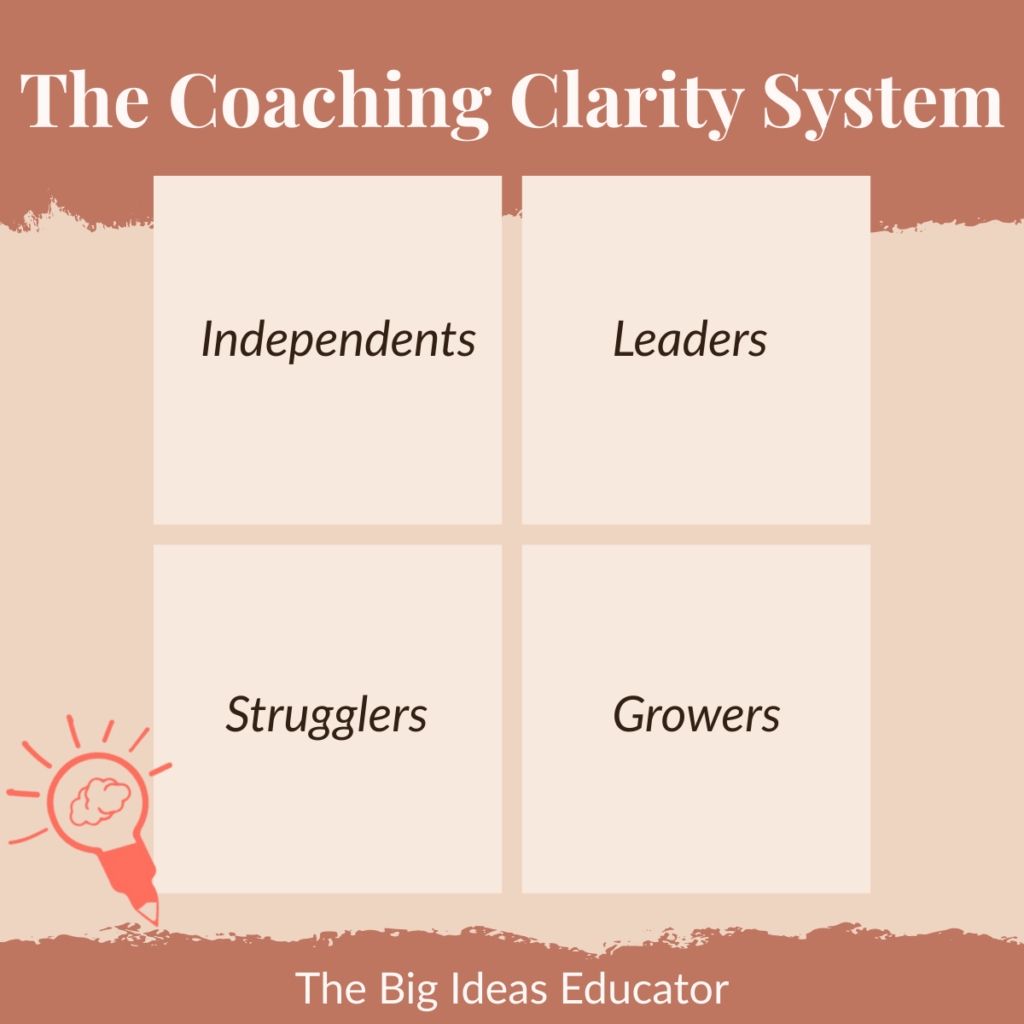
The Coaching Clarity Matrix is built on two dimensions: instructional skill and willingness to be coached.
- Instructional skill refers to the teacher’s current impact on student learning. It’s visible in student growth data, lesson design, classroom management, and overall instructional effectiveness. Skill can grow over time, but it’s important to start with an honest snapshot of where a teacher is today.
- Willingness (will) refers to a teacher’s openness to feedback, reflection, and change. A teacher with high will doesn’t need to have all the answers—they simply need a growth mindset and readiness to try new strategies. On the other hand, low will can show up as resistance, skepticism, or even avoidance of coaching conversations.
Sports Team Analogy: Think of your teachers like athletes on a team. Instructional skill is their current performance on the field, while willingness is their attitude toward coaching and practice. Some athletes may be star players but resistant to direction (high skill, low will), while others may be eager rookies with lots of potential (low skill, high will). By knowing both their performance level and their openness to growth, you can coach them in a way that gets the best from every player.
When you map teachers along these two axes, you’ll see four distinct groups emerge. Each quadrant represents a different coaching need, which allows you to target your time and energy more effectively.
Leaders (High Skill, High Will)
These teachers are your innovators and campus leaders. They deliver strong student outcomes and are open to new strategies.
Profile: Ms. Patel, a 5th-grade teacher, consistently grows her students above grade-level expectations. She eagerly volunteers to pilot new instructional strategies and often shares her methods during grade-level meetings. She’s reflective, proactive, and open to feedback. Coaches can learn from her while also challenging her to stretch further.
“Working with Ms. Patel is always inspiring. She brings new ideas to every PLC and is open to co-learning. Coaching her pushes me to grow too.” – RLA Instructional Coach, K-5
Independents (High Skill, Low Will)
Strong results, but may be disengaged or skeptical about coaching. Relationship-building is key if you want them to make an impact across the building.
Profile: Mr. Nguyen, a middle school math teacher, has strong student outcomes, but he tends to keep his distance from coaching initiatives. He attends PLCs but rarely implements suggested strategies. He’s skeptical of “new trends” but will engage when invited thoughtfully and when he sees clear relevance. Building trust is key.
“Mr. Nguyen has amazing results in his classroom. He doesn’t always jump on board immediately, but once he sees relevance, he brings incredible insight to discussions.” — Math and Science Instructional Coach, 6-8
Strugglers (Low Skill, Low Will)
These teachers need scaffolded support and may resist coaching. Focus on small wins and persistence.
Profile: Mrs. Johnson, a veteran third-grade teacher, is dedicated but faces consistent challenges with student growth. When reviewing data, she often attributes results to factors outside her control and is cautious about discussing her performance with administrators or coaches. She has consistently rejected coaching efforts, so the coach may need to involve administrators to ensure accountability and provide additional support.
“Mrs. Johnson is dedicated to her students, but it’s been a challenge to engage her in coaching. Working with admin to support her has been necessary to make any progress. The relationship is still tricky, but I’m steadily earning her trust.” — PBIS Coach, K-5
Growers (Low Skill, High Will)
Eager and coachable, ready to improve but require clear guidance and structured support.
Profile: Mr. Rivera, a high school science teacher, is eager to improve but still struggles with aligning lessons to standards and using formative data effectively. He actively seeks feedback, asks questions, and implements suggestions—but progress requires focused, structured support. Coaches can invest their time confidently, knowing his openness and effort will likely translate into measurable growth.
“Mr. Rivera is always asking questions and trying new approaches. He’s got a long way to go, but his openness makes coaching a joy, and progress comes quickly.” — Dual Language Coach, multi-campus
How to Prioritize Teachers Using a Coaching Matrix
Once you’ve plotted teachers on your Google Sheet or in your PDF, the matrix becomes your roadmap for allocating coaching time with intention. Instead of reacting to the loudest voice or the latest crisis, you can decide ahead of time what percentage of your effort each quadrant receives.
Best practice is to invest the majority of your time with Leaders and Growers—teachers who are open to coaching and ready to refine instruction. That doesn’t mean Independents and Strugglers are overlooked; it simply means they may need a different kind of support or administrative involvement before they’re ready for deeper coaching.
Over time, your aim is to help all teachers shift gradually to the right side of the matrix—building both skill and willingness—so that more of your staff ultimately land in Quadrant 1 as true Leaders.
1. Leaders (High Skill, High Will)
- Focus on extension, co-learning, and leadership opportunities
- Encourage peer modeling and piloting new strategies
- Leverage their expertise to lead change initiatives
2. Independents (High Skill, Low Will)
- Build trust and explore reasons for disengagement
- Gradually involve them in low-stakes initiatives
- Reframe coaching as collaborative, not evaluative
3. Strugglers (Low Skill, Low Will)
- Start small with scaffolded support
- Celebrate small wins
- Involve administrators when needed
4. Growers (Low Skill, High Will)
- Strengthen instructional practices through modeling and structured feedback
- Celebrate visible progress
- Focus on skill development with intentional coaching cycles
Growth Path Analogy: Picture the matrix as a trail map. Some teachers are already near the summit (your Leaders), while others are still at the trailhead (your Strugglers). Your role as a coach is not to carry everyone at once, but to walk alongside them at the pace they’re ready for. Over time, the goal is steady movement up the trail so more teachers reach the summit—Quadrant 1.
Teaser: For step-by-step strategies, coaching logs, reflective questioning, calendar support, check out the $17 Coaching Clarity System.
Turning Your Coaching Matrix Into a Weekly Calendar
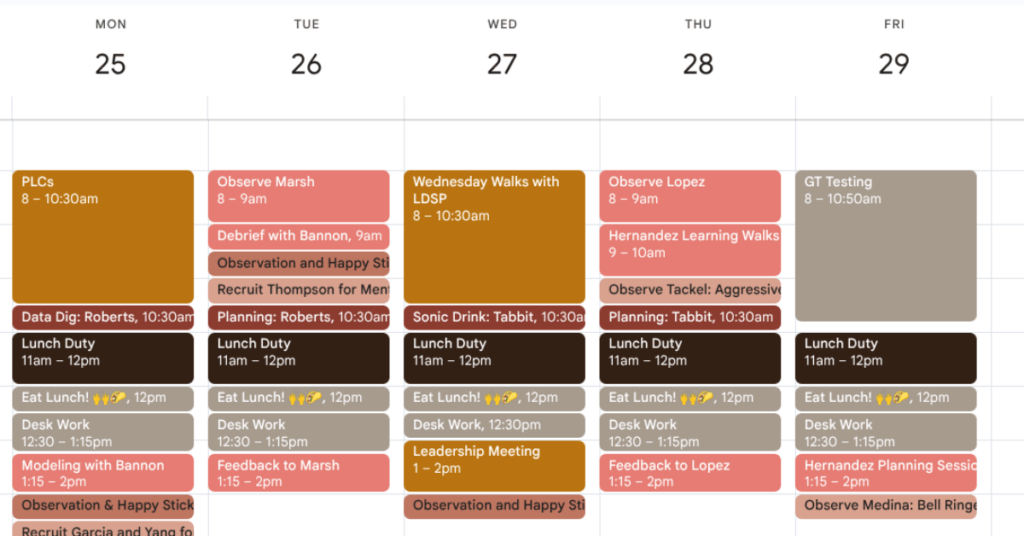
Once your teachers are plotted, turn insights into a practical weekly coaching calendar.
Step 1: Coaching Hours Audit
Calculate your total available coaching hours after subtracting lunch, PLCs, desk work, and other responsibilities. Begin with your contracted hours and work backward from there.
Step 2: Allocate Time by Quadrant
- Leaders (Q1): 20% of time
- Independents (Q2): 15% of time
- Strugglers (Q3): 15% of time
- Growers (Q4): 50% of time
Adjust percentages to fit your context, but remember that the majority of the time should be spent with your leaders and growers. That’s because your growers need and want to spend time with you, and you need to learn from your leaders and be ready to share their expertise.
Step 3: Divide Hours Among Teachers
Divide quadrant hours by the number of teachers in each quadrant to ensure balanced support. Example: if you have 3 hours to spend in Quadrant 4 this week, and 6 teachers in that Quadrant, you can schedule about 30 minutes with each of them, on average.
Step 4: Set Priorities for Each Quadrant
Define short- and long-term goals for each teacher based on available time. Use your Quadrant Strategy Guide to stay focused on spending your time wisely with teachers.
Step 5: Add to Your Calendar
- Create separate event types per quadrant
- Color-code and set recurring blocks weekly
- Schedule a weekly reflection for Friday afternoon to review wins and plan time allocation for the following week
Time Management Tips for Instructional Coaches
Managing your time well is one of the most powerful ways to prevent burnout and ensure that every teacher gets meaningful support. The Coaching Clarity Matrix gives you a framework, but it’s your day-to-day choices that bring it to life. Here are four ways to make the most of your schedule:
1. Focus on consistency over perfection
Coaching will always have interruptions—assemblies, testing weeks, and those unexpected classroom emergencies. Instead of aiming for the “perfect” schedule, aim for consistency. Even 20 minutes of purposeful coaching, repeated week after week, will move the needle more than a one-off two-hour session.
2. Block time for intensive coaching first (typically Q4)
Your Growers (low skill, high will) need the most structured, hands-on support. Protect this time in your calendar before anything else gets added. Treat these blocks as non-negotiable appointments, just like a doctor’s visit. When teachers see you showing up consistently, it communicates that their growth is a priority.
3. Use the matrix to guide where your attention is most needed
Without a system, it’s easy to default to the squeaky wheel—the teacher who emails you constantly or pulls you aside in the hall. The matrix helps you step back and look at the big picture. Who will benefit most from your time this week? Who is ready to grow if you give them the right nudge? Let the matrix make those decisions for you instead of emotions or urgency.
4. Reflect weekly to adjust priorities
No two weeks of coaching look exactly the same. End each week with a 15-minute reflection: Where did your time actually go? Did you honor your quadrant priorities? Did something shift that means a teacher should be replotted? These small check-ins prevent drift and keep your coaching aligned with long-term goals.
Pro Tip: Some coaches find it helpful to keep a simple color-coded calendar—one color per quadrant. At a glance, you’ll see if your time is balanced or skewed toward one group.
Coach Story:
“I used to feel like my calendar was being hijacked by everyone else’s emergencies. I’d plan to meet with new teachers, but then I’d get pulled into covering classes or handling data requests. Once I started blocking my Q4 coaching time first, everything changed. Even if the week went sideways, I knew my Growers were getting consistent support—and they began showing real progress. It also gave me more confidence to say ‘no’ to low-priority requests, because I could point to my coaching calendar as a reason.” – Instructional Coach, Texas
Tracking Teacher Progress with Your Coaching Matrix
Use a simple tracker or Google Sheet to:
- Record observations
- Document coaching cycles
- Track growth over time
This systematic approach ensures teachers are supported intentionally and prevents coaches from over-investing in one quadrant. It also provides much needed accountability for your administrative team if they’d like more insight into how you’re serving teachers.
The Coaching Clarity System includes two kinds of coaching logs: one that is slightly more traditional and one that utilizes a “comment” feature within the coaching matrix, so that everything is housed in one document – so you’re not opening 50 tabs a day. Both are in Google Sheets.
Looking for more instructional coaching content? I’ve got you covered.
Common Questions About Using a Coaching Matrix
What is an instructional coaching matrix?
A 2×2 framework plotting teachers by instructional skill and willingness to be coached to prioritize support.
How do instructional coaches use a quadrant model?
By plotting teachers, coaches can allocate time efficiently, assign strategies, and track progress.
Which teachers should I focus on first using a coaching matrix?
Typically, Growers (low skill, high will) need the most active support, while Leaders can be leveraged for innovation and peer mentoring.
How do I schedule coaching time effectively with a matrix?
Use a coaching calendar companion to block weekly hours by quadrant and reflect on wins and time use.
Can a coaching matrix improve teacher outcomes?
Yes — it ensures coaching is targeted, strategic, and aligned to both teacher needs and student outcomes.
Why Clarity Saves Coaches from Burnout
Clarity allows you to coach strategically instead of reactively. When you know where each teacher falls in the matrix and how much time to dedicate each week, you can:
- Allocate your time efficiently.
- Avoid over-investing in teachers who are resistant or already highly skilled.
- Build stronger relationships by meeting teachers where they are.
- Track progress and celebrate.
Taking the Next Step Toward Coaching With Intention
- Start by plotting your teachers with the free Focus Finder
- Use the Coaching Calendar Companion to schedule your week strategically
- For full access to quadrant-specific strategies, templates, and step-by-step guidance, get the $17 Coaching Clarity System, which includes both tools.
Conclusion
Instructional coaching doesn’t have to be overwhelming, but if you’re coming from the classroom where every minute is planned for you by an administrative team, the freedom can be surprising. Getting strategic with your time and energy is the key to growing your relationships, investing in teachers, and beginning to see real instructional impact in the work you do.
