
11 Ways to Thrive as an Instructional Coach and Teacher Leader
Instructional coaching and teacher leadership are among the most impactful roles in a school. Done well, they improve teaching practices, student outcomes, and school culture. Yet many coaches and teacher leaders struggle to make a meaningful difference. They may feel reactive, overextended, or unsure how to empower teachers effectively.
This guide provides a comprehensive roadmap for moving from struggling to thriving. You’ll learn practical strategies to:
- Build strong relationships with teachers
- Prioritize time for maximum impact
- Address challenges with confidence and professionalism
- Empower teacher leaders to drive change
- Keep students at the center of every decision
Whether you are new to coaching or an experienced teacher stepping into leadership, this post provides actionable advice that can transform your practice.
Why Instructional Coaches and Teacher Leaders Struggle
Before diving into strategies, it’s important to recognize common pitfalls:
- Spending too much time behind a desk instead of in classrooms
- Trying to serve every teacher equally, spreading energy too thin
- Avoiding challenging teachers or difficult conversations
- Over-planning PD sessions or lessons to perfection
- Positioning yourself as the expert instead of developing others
- Losing touch with students and their needs
These behaviors may feel safe or efficient, but they limit growth. Thriving instructional coaches and teacher leaders operate differently, combining presence, strategy, and empowerment. Note: if you’re really struggling to organize your day and make an impact, consider the Coaching Clarity System – it will overhaul your priorities and align your calendar.
Key Practices of Thriving Instructional Coaches
The following 12 practices will serve any instructional coach (and their campus) well.
1. Prioritize Classroom Presence
Coaching is most effective where teaching and learning occur. Coaches who stay behind a desk or in an office risk losing relevance and trust.
Some campuses have a culture in which for years, classroom observations were rare and documented. Strong instructional coaches help to create an environment where classroom observations and walk-throughs are routine and no big deal. Teachers stop fearing them because they are not punitive and every mistake isn’t reported to administrators.
Strategies for increasing classroom presence:
- Collaborate with teachers at their desks or in classrooms rather than waiting for invitations
- Make your presence routine and expected
- Don’t wait for teachers to approve your visit; you belong in classrooms and do not need permission to smile, learn from what they’re doing, and offer a helping hand.
- Constantly organize peer visits based on teacher strengths and challenges, and give teachers specific things to look for when they visit.
- If possible, organize walks with your admin team weekly, and calibrate afterward to decide best next steps for each teacher or team.
Pro Tip: Learn more about high quality instructional coaching from Jim Knight; his work is the gold standard for instructional coaches. See his book on instructional coaching to increase your classroom presence.

2. Build Strong Teacher Relationships
Thriving coaches focus on proactive relationship-building rather than waiting for teachers to seek them out. Small tokens of appreciation are nice, but time spent cutting out cute Pinterest templates isn’t the best way to grow trust. It will only make your teachers feel resentful that you have TIME to put together crafts.
Building strong teacher relationships is especially important with your Strugglers and Independents – the two categories of teachers most resistant to coaching. To learn more, see this post.
Ways to strengthen connections:
- Go first—initiate check-ins even when faced with potential rejection
- Listen actively before providing advice or solutions
- Celebrate teacher wins, both big and small
- Model positivity, professionalism, and ethical behavior
- Keep reaching out, even when they seem to be holding back
Why it matters: Teachers implement suggestions more readily when they feel understood and supported.
3. Focus Strategically, Not Equally
Trying to support every teacher equally can dilute your impact. Strategic coaching ensures your energy is used where it matters most.
Tips for strategic focus:
- Prioritize teachers who are ready to grow or can influence others
- Spend around 20% of your time developing teacher leaders
- Align coaching efforts with school-wide priorities and administrative goals
Example: Investing in a teacher leader who models best instructional practices can multiply your influence across the school. Spending extra time with struggling teachers who have a growth mindset will pay-off immediately.

4. Empower Teacher Leaders
Strong coaches don’t hoard expertise—they cultivate teacher leaders who can spread best practices. They ALWAYS give credit to the teachers who are paving the way rather than acting like all the best ideas are coming from themselves.
Action steps for empowerment:
- Delegate micro-PDs to teacher leaders
- Provide coaching that builds autonomy and confidence
- Offer feedback in manageable, actionable steps
Case Study: Instead of leading every PD, a coach selects teachers to host mini-sessions in their classrooms. These teachers develop leadership skills while expanding impact school-wide.
5. Address Conflict with Courage and Compassion
Avoiding difficult teachers or situations may feel safer, but it limits growth. Thriving coaches tackle challenges thoughtfully and professionally. They solve interpersonal challenges alone whenever possible, to avoid burdening the administration team.
Practical approaches:
- Use classroom observations and student data to guide conversations
- Ask thoughtful questions instead of immediately offering solutions
- Approach challenges with empathy and professionalism
- Continue to assume positive intent, and avoid reading too much into
Pro Tip: Preparing key questions in advance can help you navigate sensitive conversations confidently.
6. Balance Preparation with Efficiency
Over-preparing can lead to burnout, annoy teachers, and reduce impact. Teachers only have 3-4 conference periods a week to write or internalize the plans, make the copies, try new technologies, etc. If they can’t get a week’s worth of plans done in less than two hours, they have to bring it home.
To allow yourself 2 hours to plan a single lesson is unfair to them. Thriving coaches spend 45 minutes or less to prepare a lesson and communicate their prep minutes to teachers beforehand.
Strategies for efficient preparation:
- Use technologies that the teacher is already using when possible
- Limit lesson or PD prep to 45 minutes
- Focus on high-impact strategies over perfection
- Consider modeling just one segment at a time rather than the whole lesson
- Choose the right strategy at the right time to move teachers forward – modeling is only best when the teacher doesn’t believe his or her teachers can be successful. Otherwise, a peer visit will usually be higher impact with less preparation.
Remember: Efficiency doesn’t mean cutting corners—it means prioritizing actions that matter most.
7. Keep Students at the Center
Effective coaching and leadership always focus on students. Coaches who lose sight of students miss the ultimate measure of impact. Further, teachers feel supported when coaches know their students well enough to discuss them.
Ways to stay student-focused:
- Observe student engagement and outcomes during classroom visits
- Get to know students and their parents in common spaces like the hallways, arrival and dismissal, lunch and recess
- Focus on learning student names
- Use student data to guide coaching conversations
- Encourage teachers to reflect on how strategies affect student learning
Key Insight: Teacher growth is most meaningful when it directly benefits students. Coaching is more fun when you know the kids well.
8. Model Professionalism and Positivity
Culture starts with leadership. An instructional coach or teacher leader who gossips, complains, or demonstrates weak professional ethics erode trust. Thriving leaders model desired behavior and earn the trust of both teachers and administrators.
Strategies to model positivity:
- Maintain professionalism in all interactions
- Celebrate successes publicly (see ideas here)
- Approach challenges as learning opportunities rather than complaints
Pro Tip: Positivity and ethical behavior are contagious—modeling them inspires others.
9. Provide Actionable Feedback
Feedback is only effective when it is specific, actionable, and celebrated. Thriving coaches break down observations into steps teachers can implement immediately.
Feedback best practices:
- Offer bite-sized, specific suggestions
- Celebrate incremental wins to build momentum
- Follow up to monitor progress
- Be a great listener before jumping to solutions
Example: Instead of “work on student engagement,” suggest: “Try adding a 2-minute turn-and-talk about the question before students are expected to write a response – so that they have a chance to formulate answers before working independently.
10. Serve with Joy and Graciousness
Thriving coaches approach their responsibilities with a positive mindset. They see every duty, assignment, and classroom visit as an opportunity rather than a chore.
It may sound cheesy, but when it feels like the whole world is spewing negativity at teachers and public schools, the ability to tune everything out and serve with joy will be a breath of fresh air for your whole community.
Ways to cultivate a service mindset:
- Treat every task as an opportunity to support teachers and students
- Focus on gratitude and impact rather than inconvenience
- Model joy and commitment to inspire others
11. Develop Teacher Leadership
Instructional coaches thrive when they cultivate strong teacher leaders. Teacher leadership mirrors the traits of thriving coaches: proactive relationships, ethical behavior, and strategic influence.
Ways to develop teacher leaders:
- Have a group of teachers who are willing to open their classrooms for peer observation on a moments’ notice (see this article from Edutopia for more info)
- Lift every voice in PLC to encourage sharing of ideas rather than coach-directed PD
- Ask teachers to present their ideas in more formal settings – at district PD and at school-based PD
- Notice the natural gifts and passions of your teachers and encourage them to form committees or serve in leadership positions
Why it matters: Teacher leaders amplify the coach’s influence, spreading best practices and fostering a culture of excellence.
Common Mistakes to Avoid
Even experienced coaches and teacher leaders can fall into traps that limit impact. Some pitfalls include:
- Trying to run every PD instead of empowering teachers
- Giving broad or overwhelming feedback
- Over-planning lessons or PD sessions
- Complaining about assignments rather than modeling a positive attitude
- Ignoring high-performing teachers or potential teacher leaders
By identifying and avoiding these pitfalls, coaches can maximize their influence without burning out.
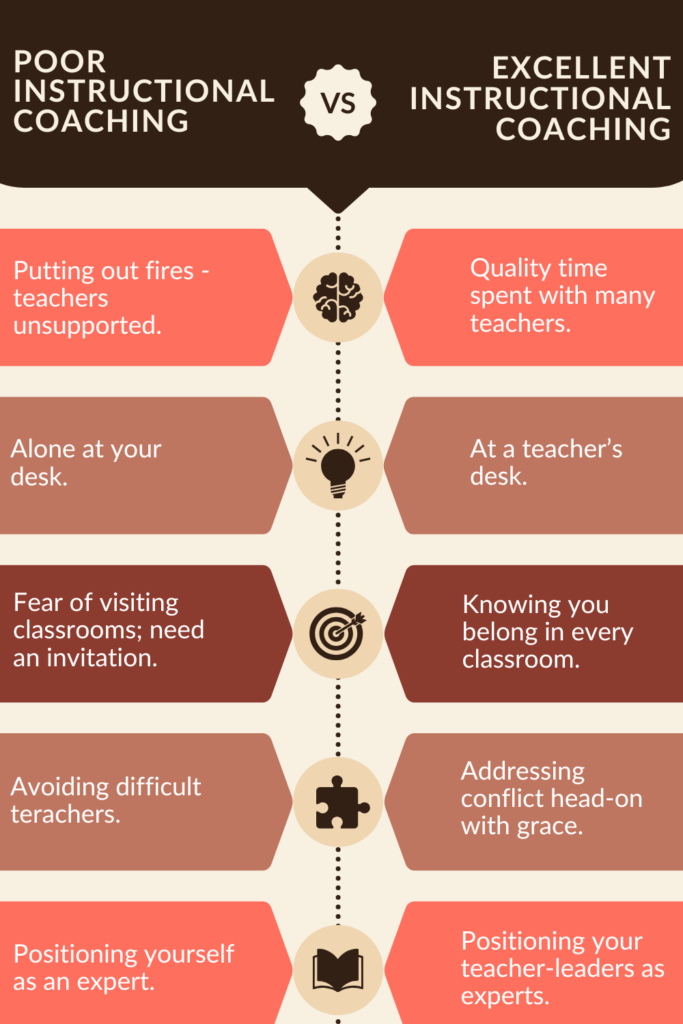
From Struggling to Thriving: A Checklist
Thriving coaches and teacher leaders consistently:
- Are present in classrooms, not hidden behind a desk
- Initiate connections and relationships proactively
- Prioritize high-impact teachers and initiatives
- Empower teacher leaders to take ownership
- Address conflict thoughtfully and professionally
- Balance preparation time efficiently
- Keep students at the center of coaching and leadership decisions
- Model professionalism, positivity, and ethical behavior
- Provide actionable, bite-sized feedback
- Serve with joy and a collaborative mindset
Implementing these strategies, even gradually, can dramatically improve teacher performance, student outcomes, and school culture. What are your strengths as a coach, and where do you struggle?
Conclusion
Instructional coaching and teacher leadership are high-impact roles that require intentionality, strategy, and courage. The difference between struggling and thriving is not about working harder—it’s about working smarter, building relationships, and empowering others.
Start by taking small, deliberate steps:
- Spend more time in classrooms
- Initiate connections with teachers and leaders
- Delegate responsibilities to empower teacher leaders
- Provide actionable feedback and celebrate progress
Over time, these practices compound, creating a culture of excellence that benefits teachers, students, and the entire school community.
Final Thought: Thriving is a mindset. Coaches and teacher leaders who adopt proactive, strategic, and empowering practices transform schools from the inside out.
